
24 September 2026
Does the XPeng G6's Glass Roof Need a Sunshade? A 3-Hour Heat Test
A 2023 test by Chinese outlet EV Smart Travel parked an XPeng G6 and a car with its sunshade closed in direct sun for three hours and logged roof-glass and seat temperatures hourly. The seat ended within 0.6C of the shaded car - but the G6's glass itself ran about 3C hotter. What the numbers do and do not show, the Low-E technology behind it, and the methodology holes.
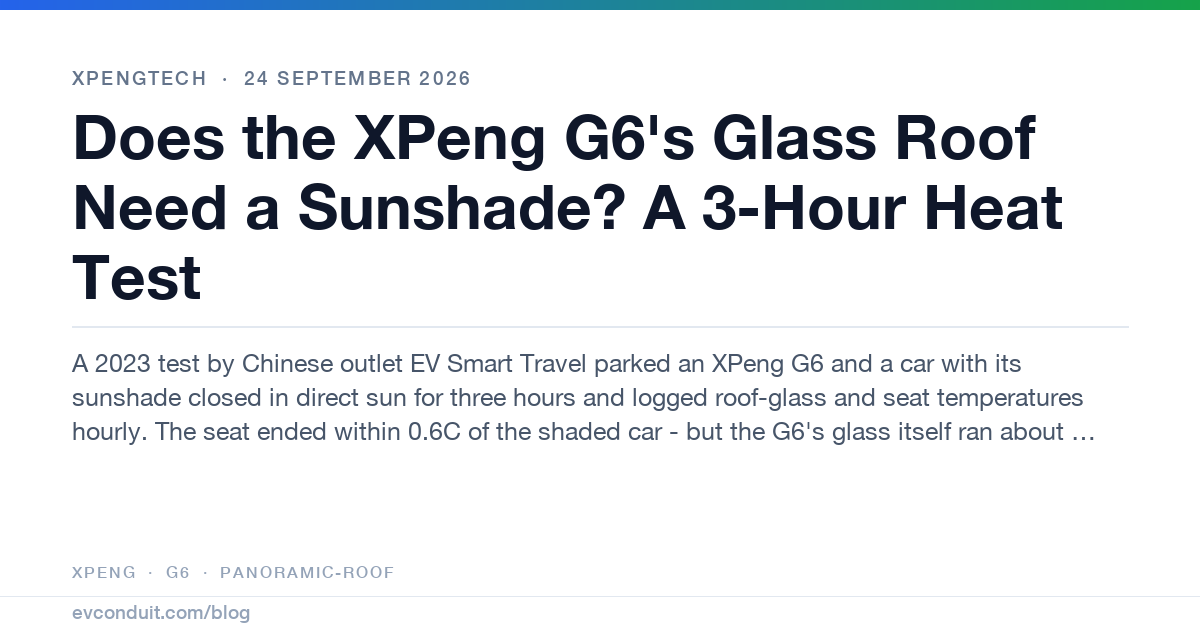
Panoramic glass roofs have a bad reputation. The complaint writes itself: a big pane of glass with no sunshade, directly above your head, in summer. Plenty of buyers have concluded they are a gimmick that manufacturers should simply delete.
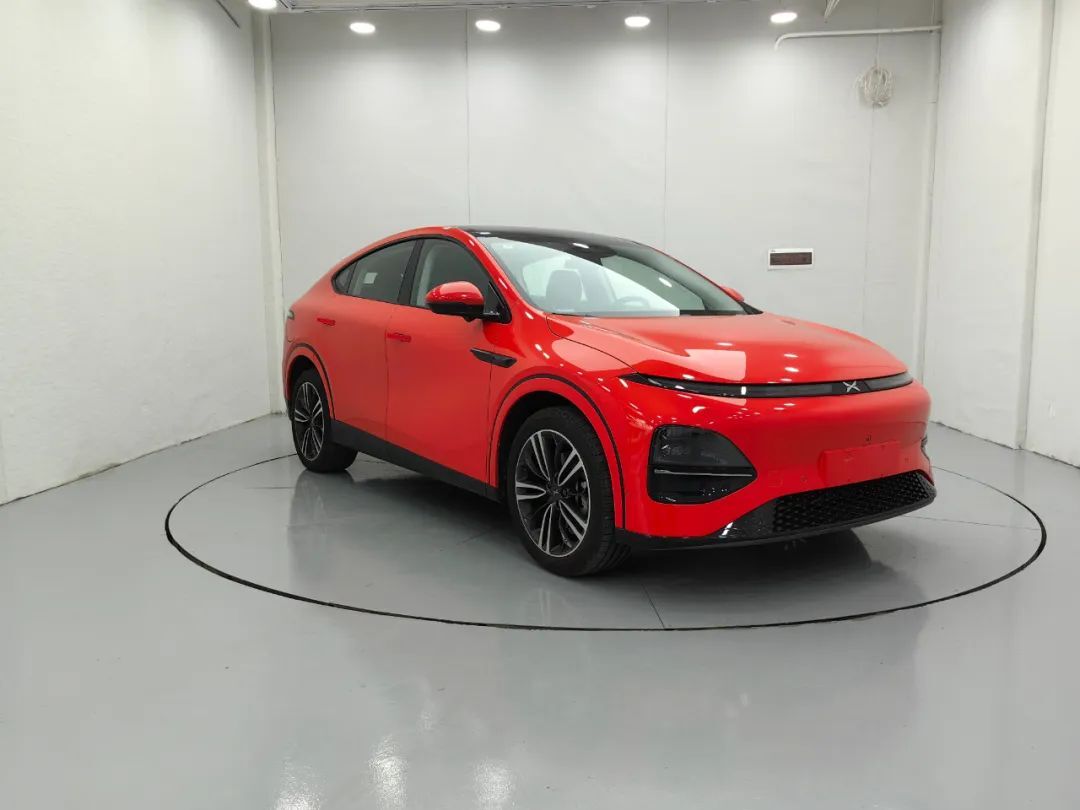
In August 2023, the Chinese outlet EV智行 (EV Smart Travel) decided to test that assumption rather than assert it. They took an XPeng G6 — which has a panoramic roof and no sunshade — and parked it in direct sun alongside a car that does have a sunshade, measuring temperatures hourly. Their conclusion, and the reasoning behind it, are worth walking through.
How the test was run
The two cars were parked under the same sky in direct sunlight for a little over three hours, starting at 12:20. Temperatures were logged once an hour, using an infrared thermometer aimed at two points: the roof glass and the seat. The comparison car was a Kia Sportage with its sunshade closed.
The video below is the original test footage with English subtitles added.
The numbers
The test's own chart compares roof-glass and seat temperatures side by side.
| Time | XPeng G6 (roof / seat) | Kia Sportage (roof / seat) |
|---|---|---|
| Start (12:20) | 42.5 °C / 38.5 °C | 41.5 °C / 35.7 °C |
| +1 hour | 50.1 °C / 41.6 °C | 50.7 °C / 43.6 °C |
| +2 hours | 55.4 °C / 51.2 °C | 54.7 °C / 50.1 °C |
| +3 hours | 62.1 °C / 59.2 °C | 58.9 °C / 59.8 °C |
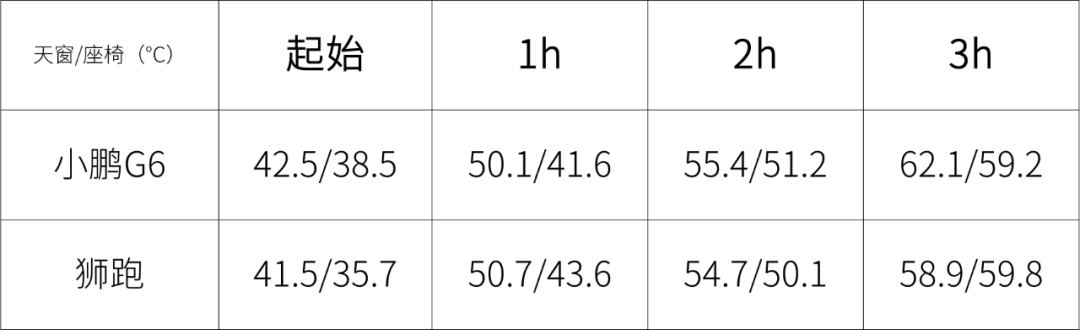
The outlet's summary was that the two cars finished "within a 2–3 °C band," and that the G6's glass roof therefore does the same job as a sunshade.
That summary is broadly fair, with one caveat that is easy to miss. Look at the bottom row. By the third hour the seat temperatures are effectively identical — 59.2 °C in the G6 against 59.8 °C in the car with the sunshade, a 0.6 °C difference in the G6's favour. But the roof glass tells a different story: the G6's glass reached 62.1 °C against the Sportage's 58.9 °C, roughly 3 °C hotter.
That is not a contradiction of the headline claim — the seat is what an occupant actually touches, and there the G6 matched a shaded car. But it does mean the glass itself runs hotter, which is consistent with the physical picture: the roof is absorbing and re-radiating rather than blocking outright.
Why the glass behaves the way it does
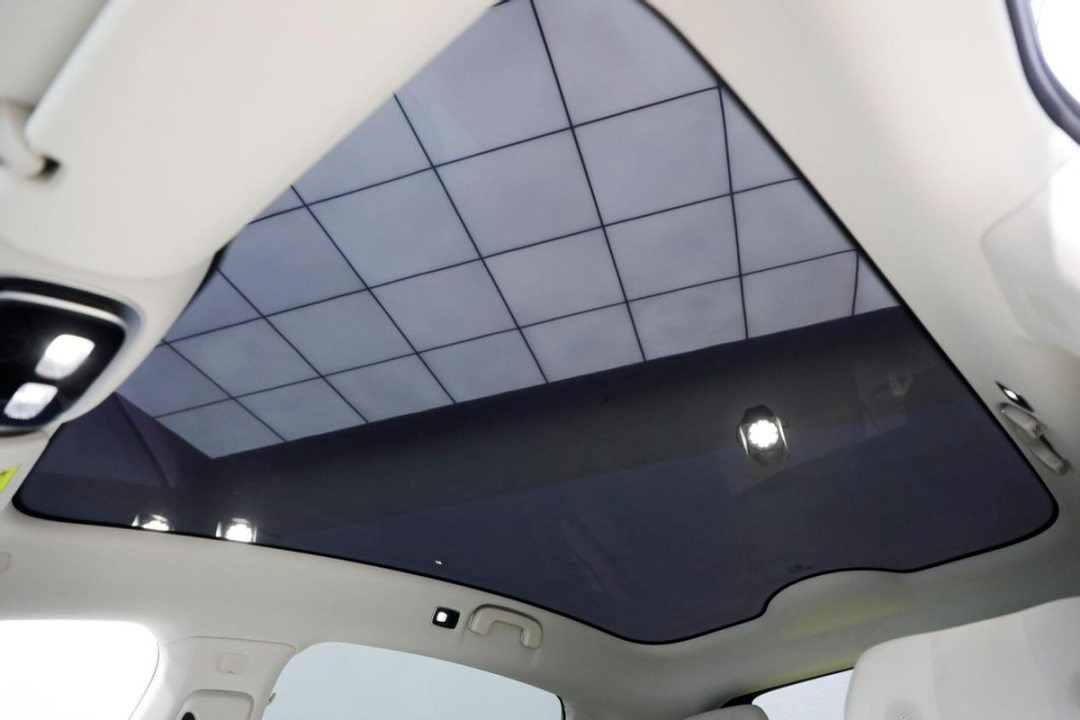
The G6's roof is not a plain pane. It uses a silver-ion coating plus a Low-E (low-emissivity) film working together, which reflects part of the incoming sunlight instead of letting it through.
The figures usually quoted for this arrangement are 98.5% of infrared and 99.9% of ultraviolet blocked. Treat those as the manufacturer's claim — they are repeated widely across Chinese media and owner forums rather than being an independently measured result, and nothing in this test verifies them directly.
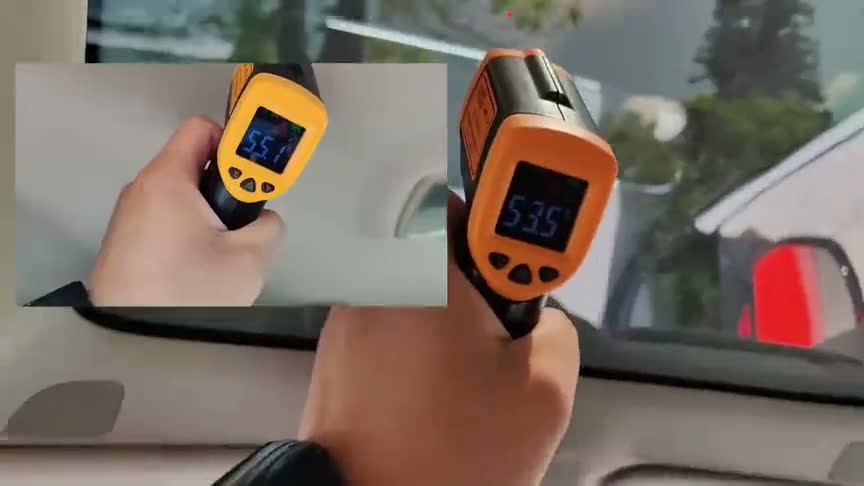
The test did produce one supporting observation. At the start, the thermometer read only in the 30s on the inner surface of the roof while the outer surface was already in the 50s — which is what you would expect if the glass were reflecting infrared back outward rather than conducting it in. The infrared gun reads surface infrared, so a lower reading inside means less infrared is present inside.
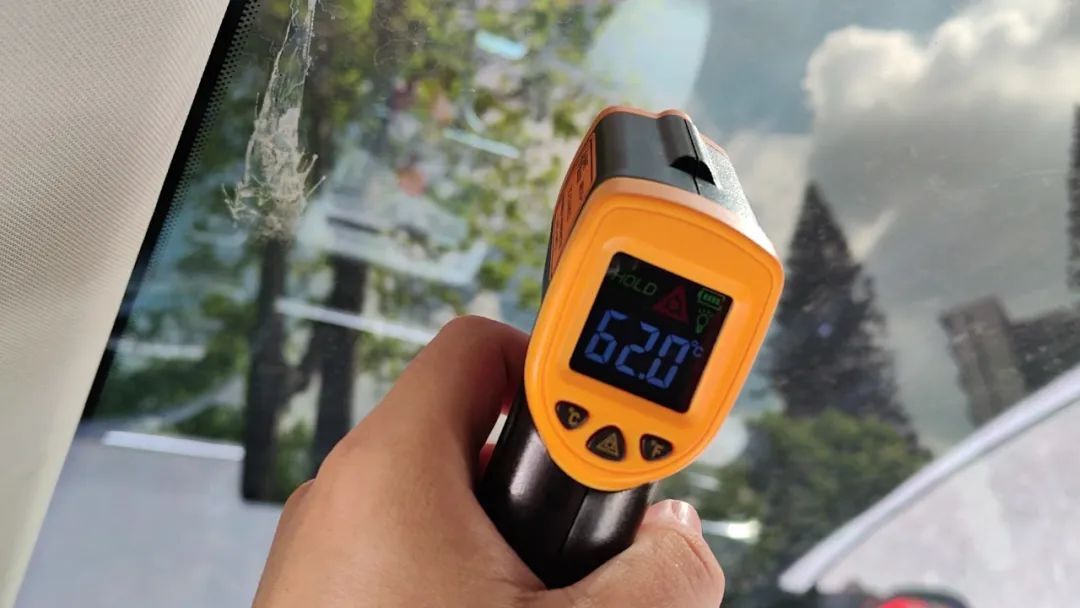
A separate photo from the same test shows the infrared thermometer reading 62.0 °C at the roof glass — close enough to the 62.1 °C the chart records at three hours to look like the same measurement.
Why glass roofs feel hotter than they measure
The outlet offered two explanations for the gap between reputation and data, and both are reasonable.
First, psychology. If you get into a glass-roofed car after it has been standing in the sun, you expect to feel heat radiating from above — and you may well be primed to notice it. A similarly hot car with a solid roof and a sunshade produces the same heat without the same expectation.
Second, and more concretely, window film. The cars being ridden in and reviewed were press cars, which had no tint or film applied. Untreated side glass lets in a lot of solar energy regardless of what the roof is doing. The roof may be doing its job while the windows undo it.
The outlet was also careful not to overclaim: if you still feel hot, an aftermarket sunshade remains a perfectly reasonable thing to buy, and they note that most models offer one.
The practical part: cabin heat and remote cooling
The most useful takeaway is not about the roof at all.
After several hours in the sun, cabin temperatures reached the 60s (°C) — that is true of the shaded car too. Getting into a car at that temperature is genuinely unpleasant and, more importantly, is the condition under which interior materials off-gas.
The recommendation is to cool the car remotely before you get in, rather than climbing in and starting the air conditioning. On the G6, the app's rapid-cooling function reportedly brought the roof and seat from the 60s down to around 40 °C in five minutes, and the cabin into the 30s after ten minutes — at which point it is comfortable.
What this test does not establish
This is a single test, run once, by one outlet, and the methodology has real limits that deserve stating plainly.
It does not isolate the variable. Comparing a G6 against a Kia Sportage compares two entirely different vehicles — different glass area, cabin volume, body colour, seat materials, insulation and starting temperatures. The G6's seat began the test at 38.5 °C against the Sportage's 35.7 °C, so the two cars did not even start level. Any conclusion about "glass roof versus sunshade" is tangled up with "G6 versus Sportage."
It measures surfaces, not cabin air. The recorded values are roof-glass and seat temperatures. The article describes them as "interior temperature," which is reasonable shorthand for occupant comfort, but it is not cabin air temperature.
No conditions are reported. Ambient temperature (the video says only "above 30 °C"), solar irradiance, wind, parking orientation and cloud cover are all unrecorded — exactly the variables that determine the result.
The 98.5% / 99.9% figures are not tested here. They are the manufacturer's claim, repeated.
The framing is not neutral. EV智行 is an automotive media outlet, and the piece is written as a defence of a feature on a specific car. That does not make the numbers wrong — the chart is the chart — but the interpretation is the outlet's.
And it is from 2023. The G6 has been updated since; nothing here should be read as a statement about later model years' roof construction.
The defensible conclusion is narrower than "glass roofs are fine." It is that in this test, on this day, a G6's seat stayed within about 3 °C of a car with its sunshade closed — and that a roof which reflects infrared is doing something real, even if its glass surface ends up hotter than a shaded one.
Source: EV智行, via Tencent News (7 August 2023) — translated & adapted for XPENGTech. Read the original article.
Get the next one direct.
New articles, or a daily / weekly digest — the same list EVConduit keeps.