
25 September 2026
VW and XPeng's ID.UNYX 09 Goes on Sale From 179,900 Yuan
Volkswagen Anhui's ID.UNYX 09 - the second model jointly developed with XPeng - went on sale on 24 October from ¥179,900, or ¥169,900 after incentives, ¥20,000 below September's pre-sale entry. Three trims, CATL 91.96 kWh LFP, 800 V 5C charging, up to 755 km CLTC, dual-chamber air suspension, and XPeng's VLA-based driving system on the Turing chip.
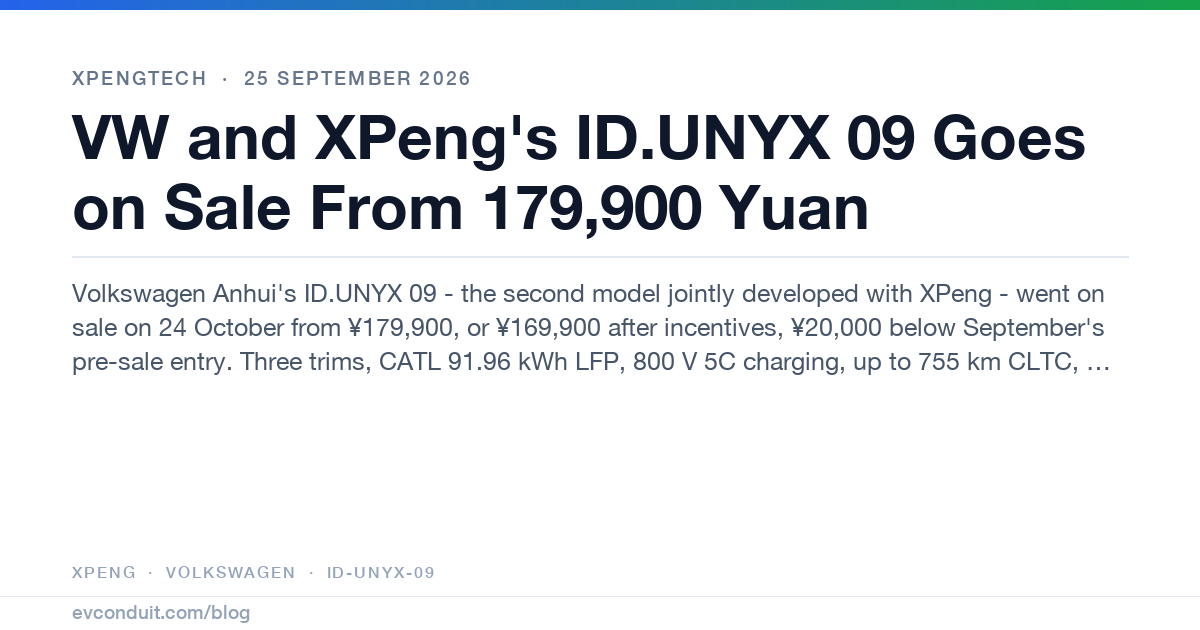
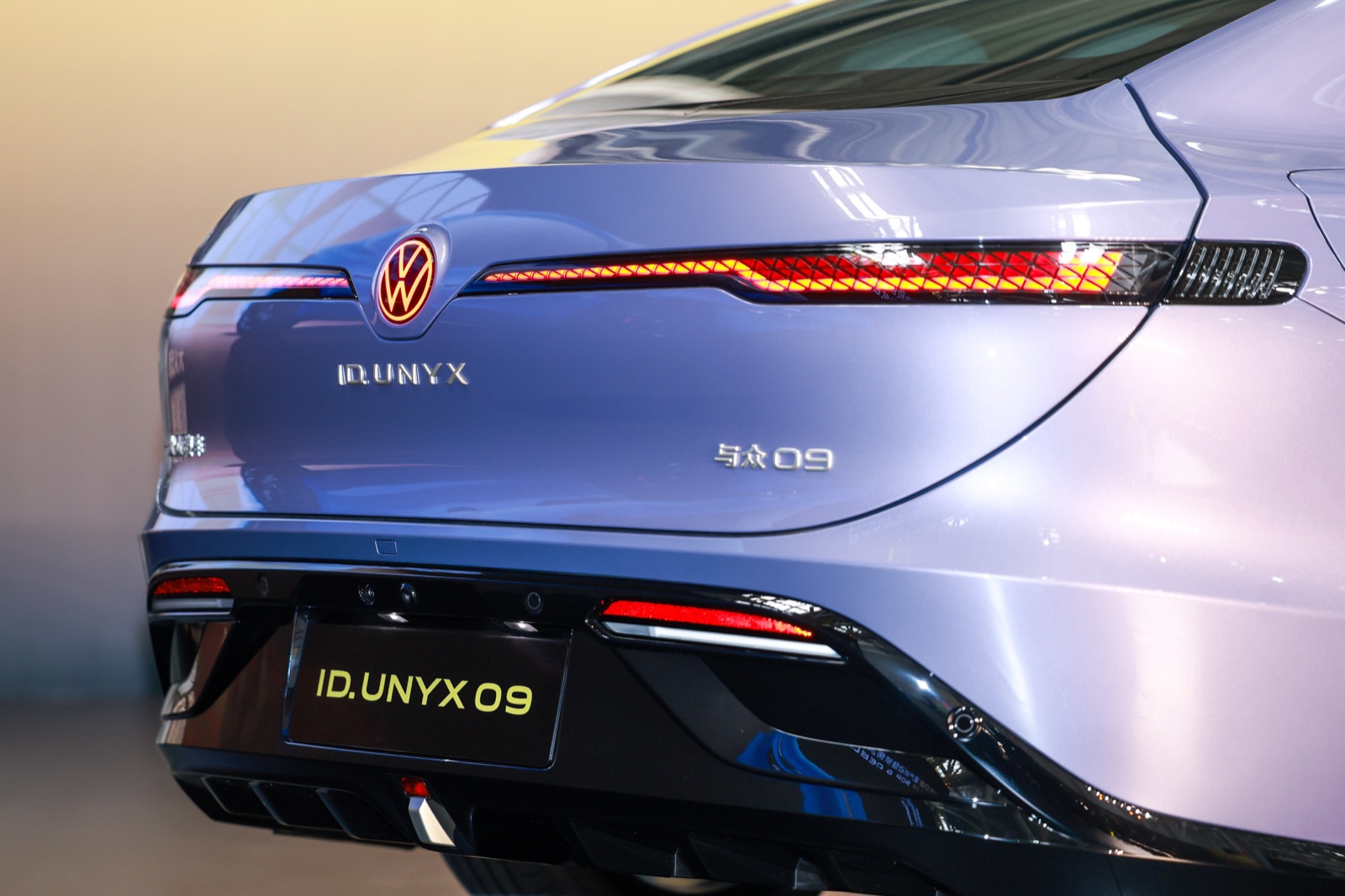
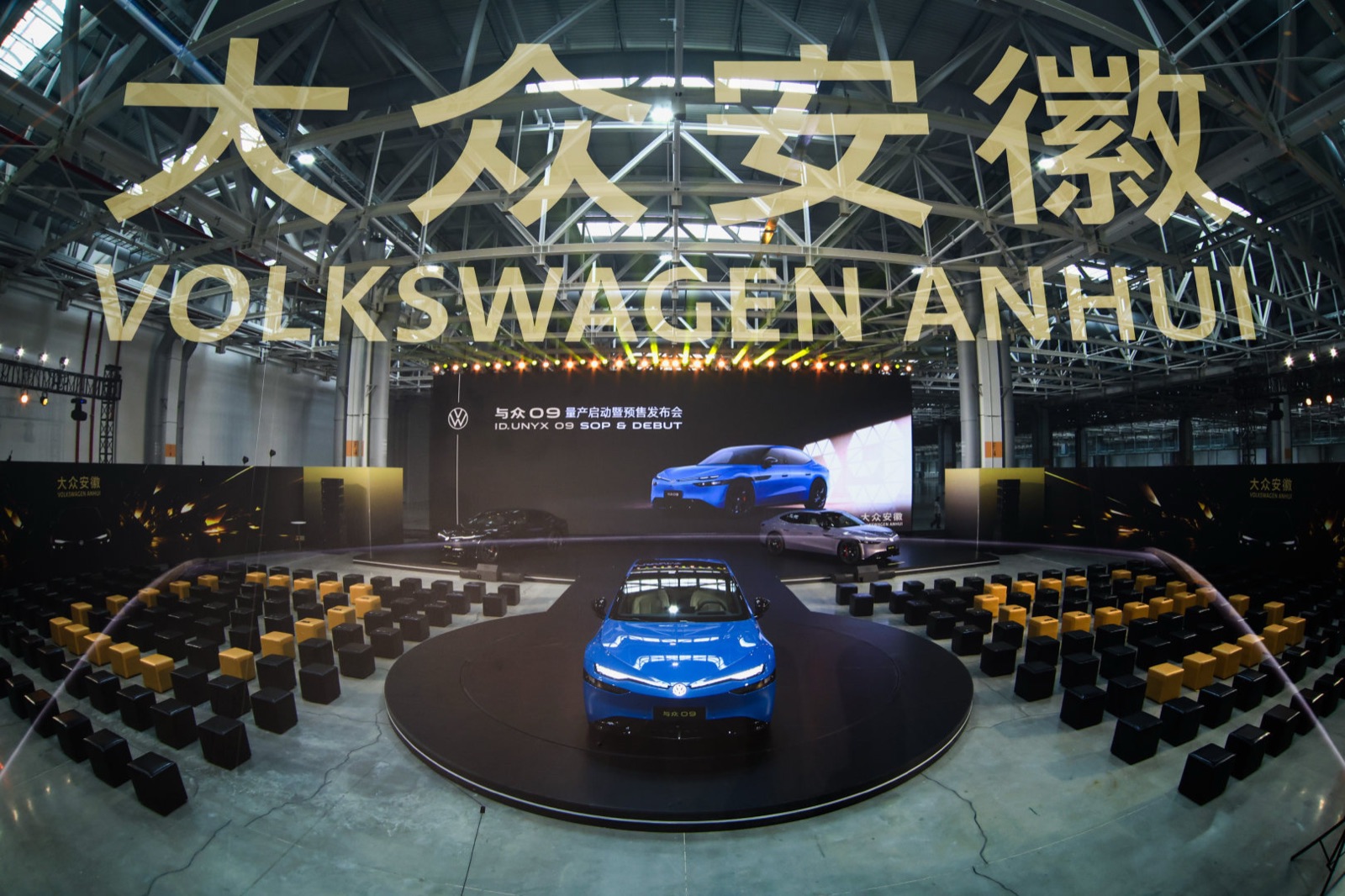
Volkswagen Anhui's 与众09 (ID.UNYX 09) opened pre-sales and started production on the same day — 24 September 2026 — and it is the clearest evidence yet of what the Volkswagen–XPeng partnership actually produces.
It is the second mass-production model jointly developed by Volkswagen and XPeng, following the 与众08, and the two companies brought it from project approval to production in 24 months. It is also Volkswagen Anhui's first pure-electric four-door coupe.
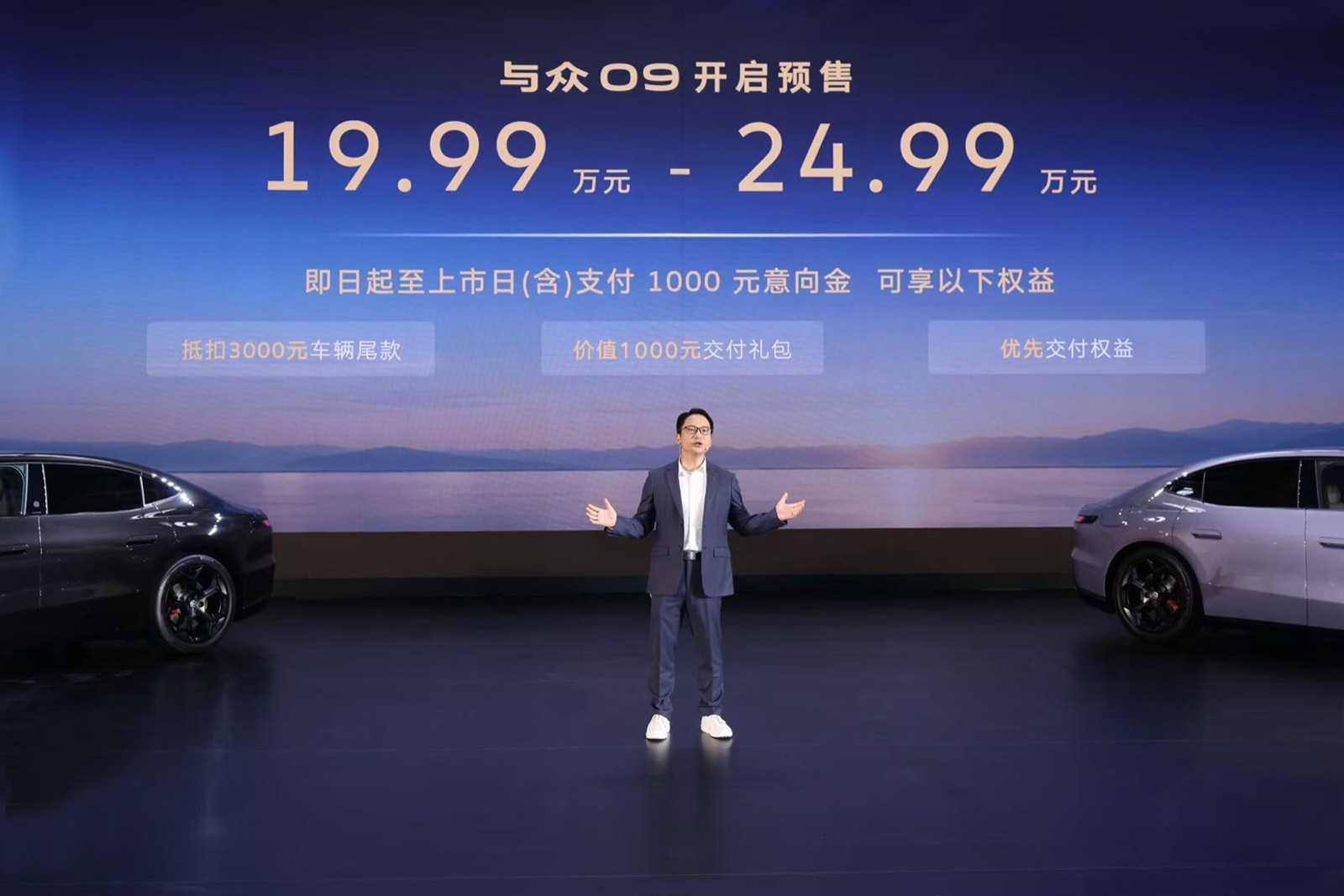
Pre-sales opened at ¥199,900 to ¥249,900. It went on sale on 24 October at ¥179,900 to ¥249,900, or ¥169,900 after incentives - see below.
Launch, 24 October: the final prices
The car went on sale on 24 October 2026 in three trims, at ¥179,900 to ¥249,900 - and from ¥169,900 after incentives, which is how Autohome led its launch story.
The important line is the entry price: it is ¥20,000 below the pre-sale figure of ¥199,900, while the top trim stayed at ¥249,900. Volkswagen Anhui moved the car down into the ¥170,000s rather than holding the September number.
The specification table that came with the launch, as reported by Autohome:
| Item | Launch detail |
|---|---|
| Trims | 3 |
| Price | ¥179,900 - ¥249,900 (¥169,900 after incentives) |
| Range (CLTC) | 755 km single-motor / 705 km dual-motor |
| Motors | 230 kW single; 140 kW front + 230 kW rear dual |
| Battery | CATL 91.963 kWh LFP |
| Wheels and brakes | 21-inch wheels, Brembo calipers |
| Lighting | DLP matrix projection headlights, crystal laser-etched LED units projecting a lane carpet and vehicle-width marker |
| Display | 85-inch AR-HUD, floating square centre screen, dedicated instrument display |
| Chassis | Vibracoustic dual-chamber air suspension, DCC adaptive damping |
| Charging | 800 V, 5C |
| Driving assistance | VLA large-model full-scenario system with custom parking, exit-and-park, remote parking and trace-reversing |
Autohome positions it against the BYD Seal 08 and the Xiaomi SU7, and describes the pitch as a combination of "German engineering quality plus localised intelligence" - the intelligence being the part that comes from XPeng.
The XPeng half: the driving system is the story
Stripped of the bodywork, the reason this car matters to an XPeng audience is that XPeng supplies the intelligence.
The car runs a jointly developed driver-assistance system branded 行云智行 (Xingyun), built on XPeng's second-generation VLA end-to-end model with a pure-vision sensor approach — no lidar. XPeng's own announcement describes it as "an autonomous driving system based on the XP5 chip and VLA 2.0 software."
That "XP5" name is worth decoding, because almost every Chinese outlet covering the launch calls the same silicon something else. Reports on the day describe the car as standard-fitted with XPeng's Turing AI chip (图灵AI芯片) with 750 TOPS of total compute. XP5 is not a different chip: a 36Kr report in December 2024 identified XP5 as XPeng's internal codename for its self-developed driving chip — "the full-stack NGP is already running on the XP5 chip." XPeng's post is simply using the in-house designation for the Turing silicon.
The sensor set is 26 pieces of hardware: 11 cameras, 3 millimetre-wave radars, 12 ultrasonic sensors and one in-cabin driver-monitoring camera. On that, Volkswagen Anhui claims highway NOA, city NOA, point-to-point AI driving, automatic parking, remote parking, valet parking and trace-reversing, with a "smooth handover" of control when a human takes over.
The Volkswagen half: dimensions, drivetrain and charging
| Specification | Figure |
|---|---|
| Length × width × height | 5,081 × 1,980 × 1,509 (1,526) mm |
| Wheelbase | 3,030 mm |
| RWD | single rear motor, 230 kW |
| AWD | dual motor, 370 kW combined |
| CLTC range | 755 km (RWD) / 705 km (AWD) |
| Battery | CATL 91.963 kWh LFP |
| Architecture | 800 V |
| Charging | 5C — 10 min ≈ 500 km; 10–80% under 12 min |
| Suspension | dual-chamber air suspension |
| Assisted driving | XPeng second-gen VLA, pure vision, 750 TOPS |
Two details stand out beyond the numbers.
This is Volkswagen's first 5C car. For a brand that has been criticised for slow charging on its Chinese EVs, jumping straight to a 10–80% time under 12 minutes is a notable step — and it is the kind of thing the XPeng relationship was supposed to deliver faster than Volkswagen could alone.
The 91.963 kWh figure is exact and odd, which is usually a sign it is real rather than rounded marketing. All variants use CATL-supplied LFP cells, which puts this squarely in the volume segment rather than the performance one.
Design and positioning
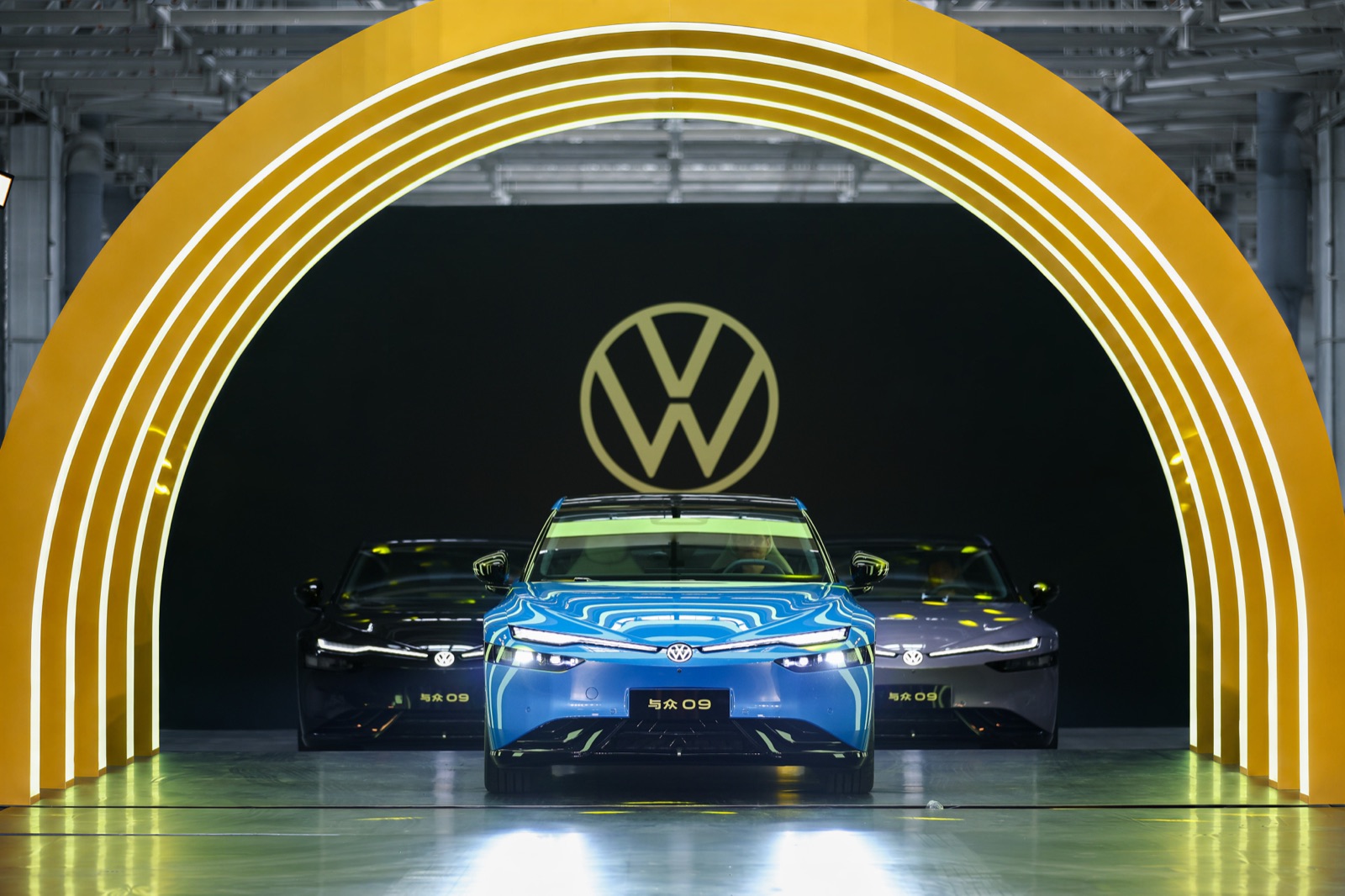
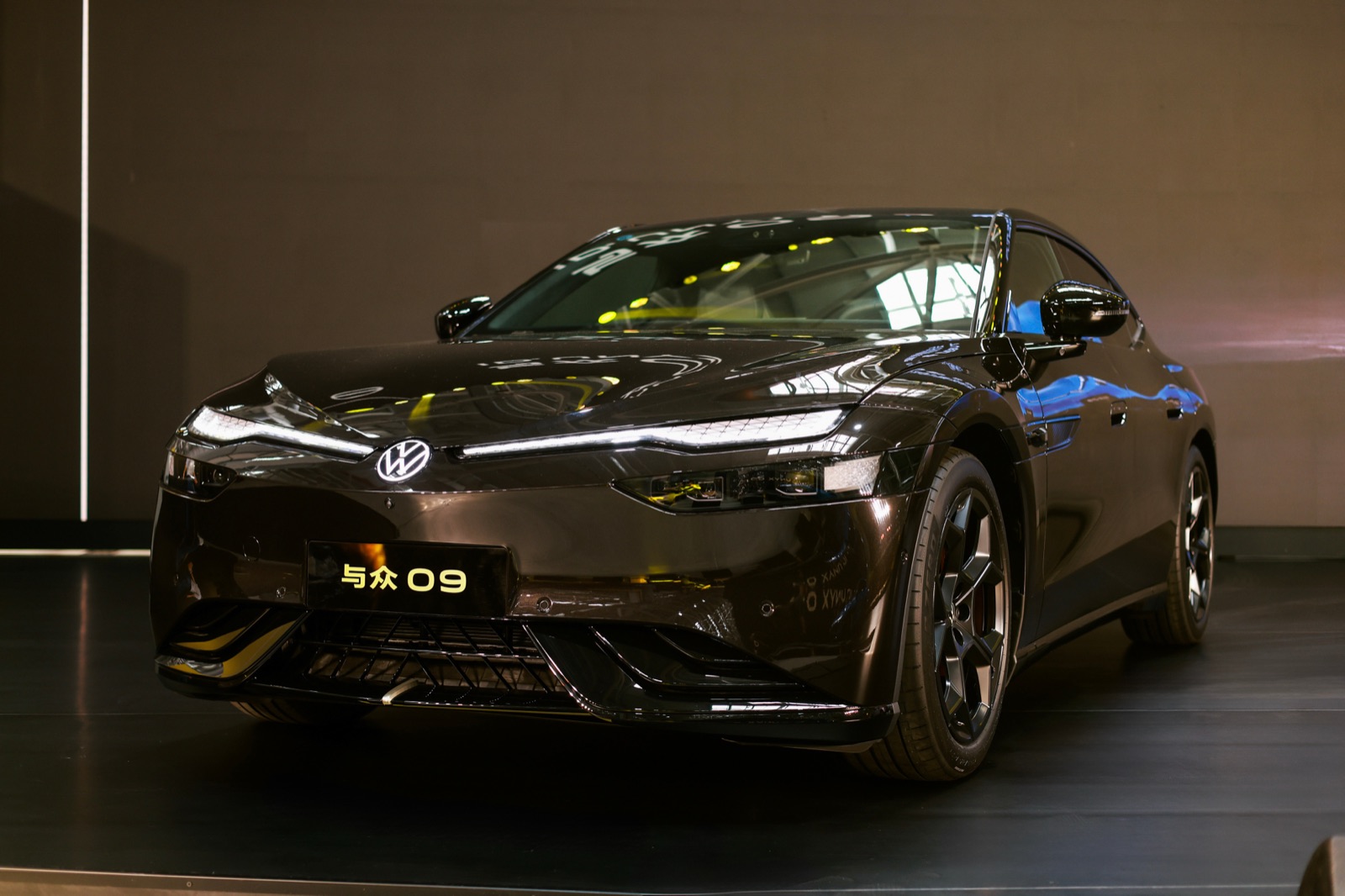
Volkswagen Anhui calls the styling language "wolf-series aesthetics" — the ID.UNYX family's own visual identity, deliberately separate from the main Volkswagen ID line. It shows up as crystal-cut headlight clusters, a long bonnet, fastback roofline and a wide body on a 3,030 mm wheelbase. There is a wolf-head emblem and a gold Volkswagen logo. The interior technology is badged 云栖智舱 (Yunqi), developed with XPeng and closely modelled on XPeng's own cockpit interaction logic.
At ¥199,900 the car lands directly in the busiest part of the Chinese EV market. The competitors named in coverage are the Xiaomi SU7, Tesla Model 3 and Shangjie Z7 — which is to say, Volkswagen Anhui is not protecting a premium position here. It is fighting for volume, in a segment where German badge equity alone has not been enough.
Pre-sale terms (September, now superseded)
- ¥199,900 – ¥249,900 at pre-sale; final prices are ¥179,900 – ¥249,900
- A ¥1,000 intent deposit, paid any time up to and including the launch date, entitles buyers to:
- ¥3,000 off the final vehicle payment
- a ¥1,000 delivery gift pack
- priority delivery
Why this lands now
This is the concrete answer to a question He Xiaopeng was asked on 17 September, when he told Yicai that XPeng was "talking with Volkswagen about further cooperation" and was in talks with more carmakers and non-carmakers about technology and chips — and that the Paris Motor Show on 12 October might bring "several new examples of XPeng's overseas cooperation." (We covered that exchange here.)
A Volkswagen-badged coupe shipping XPeng's own chip and XPeng's own driving model is a more substantial demonstration of that partnership than any announcement. It also illustrates the shape of the business: XPeng is not selling cars to Volkswagen — it is selling the stack.
Caveats
Specifications come from launch-day coverage, not from a full official specification sheet. The dimensions, motor outputs, battery capacity, range figures and charging times were reported consistently across multiple Chinese outlets on 24 September and are used here on that basis; XPeng's and Volkswagen Anhui's own posts are promotional in tone and do not publish the full table.
Some figures are inferences by journalists, not company statements. The 0–100 km/h time "under 5 seconds" for the AWD version appeared as an estimate. The cockpit chip is unstated for this model; coverage assumes a Qualcomm 8295 based on the 与众08 that preceded it, and that assumption should not be treated as confirmed.
The XP5-equals-Turing identification is ours, and it is indirect. XPeng's post says XP5; the same-day coverage says Turing; the link between the two comes from a 2024 36Kr report describing XP5 as XPeng's internal chip codename. We think that is right, and we have said where it comes from rather than presenting it as official.
One outlet speculated the car fits two Turing chips based on the 与众08's configuration. The 750 TOPS figure most commonly reported is consistent with a single Turing chip, so we have stated 750 TOPS and not a chip count.
The prices are final now - ¥179,900 to ¥249,900 from 24 October - but the specification table is Autohome's, not a manufacturer document, and trim-by-trim equipment has not been checked against Volkswagen Anhui's own price list.
Source: 小鹏汽车 and 大众安徽, Weibo; launch coverage from 凤凰网汽车, 第一电动网 and others, 24 September 2026, and Autohome's launch report of 24 October 2026 — translated & adapted for XPENGTech.
Updated 24 October 2026: the car went on sale at ¥179,900–249,900, ¥20,000 below the pre-sale entry price; the launch specification table is added above.
Get the next one direct.
New articles, or a daily / weekly digest — the same list EVConduit keeps.