
4 September 2026
Why V14 Lite, Not V13 Lite: The Logic Behind XPeng's Max Distillation
XPeng distilled the Max (single-Turing) version from VLA 6.3.0, not older models. Here's why the 'teacher' model matters.
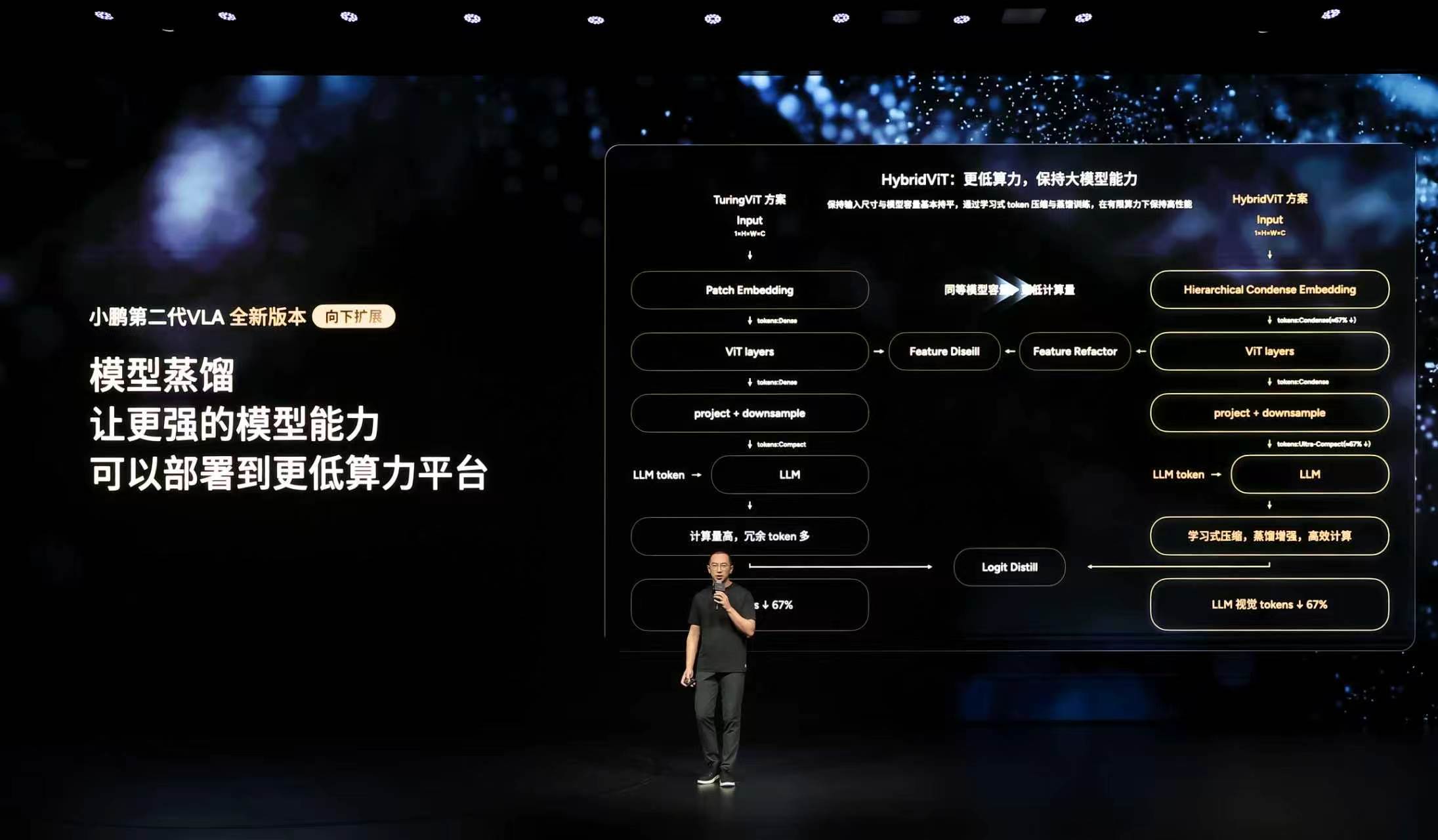
Let me explain when my view on XPeng's "distillation" began to shift.
First: I recently reviewed a lot of V14 Lite case studies and discussed a question with industry friends — why V14 Lite, and not V13 Lite?
During this period I posted a lot on Weibo. One post contained my speculation: V13 may rely more on "inference-side scaling," while V14 relies more on "training-side intelligence."
Second: the single-Turing distillation version was given to early adopters for internal testing — version 6.3.0.
That's a crucial point: the Max distillation version is built on the new 6.3.0 model, not the older 6.1.0 or 6.2.0.
This is essentially the same logic as FSD pushing V14 Lite to HW3 instead of V13 Lite. Long-time HW3 owners had long complained about why Tesla hadn't given them V13.
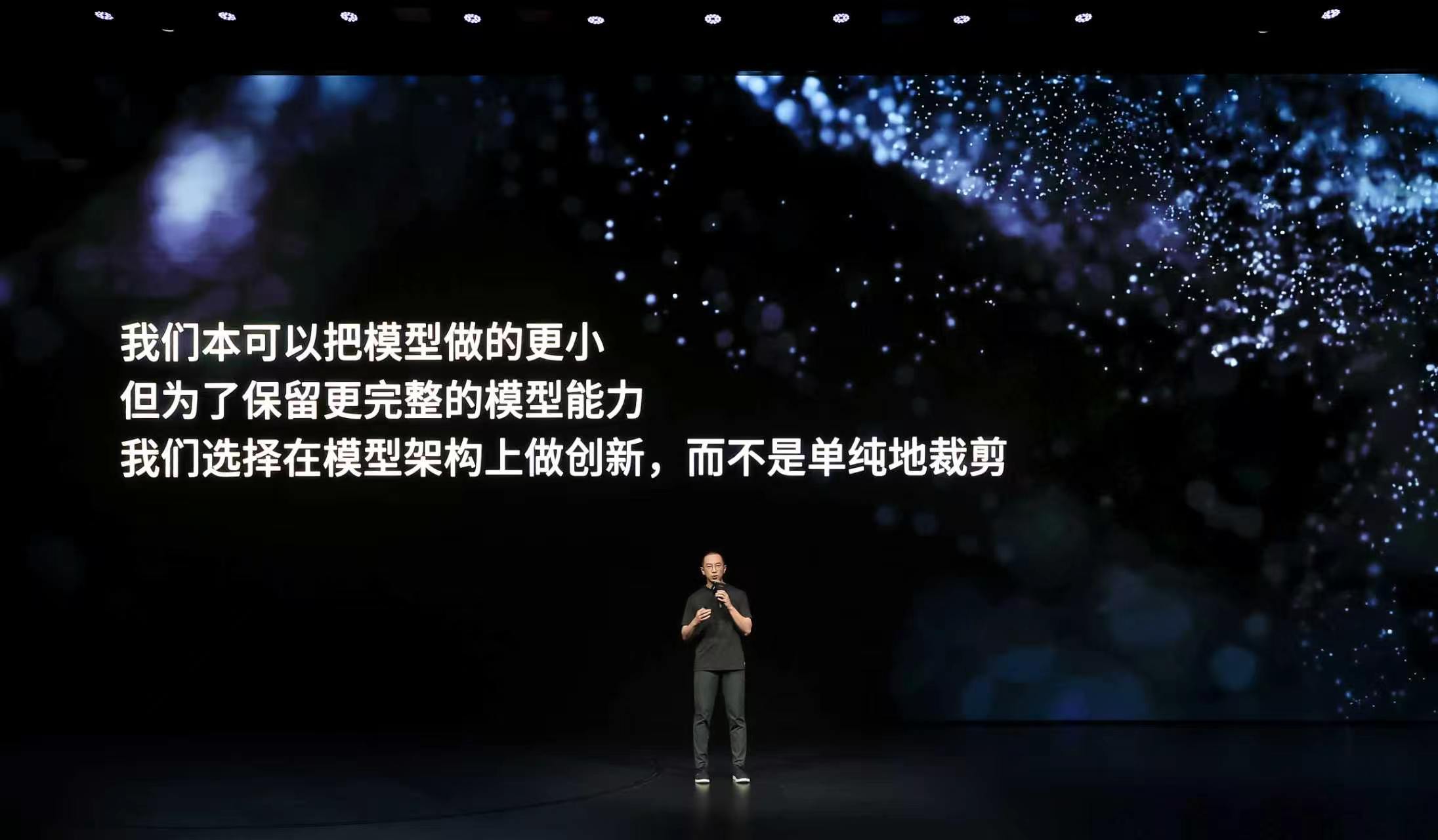
If your goal is to distill a smaller, lighter model for an older platform, the best "parent" model should naturally be the one with stronger capability and a better underlying architecture.
So my current read: XPeng chose to distill Max at this point likely because it was waiting for the new 6.3.0 architecture.
I don't know how accurate this guess is, but on the available information, it's the most reasonable logic.
Figures
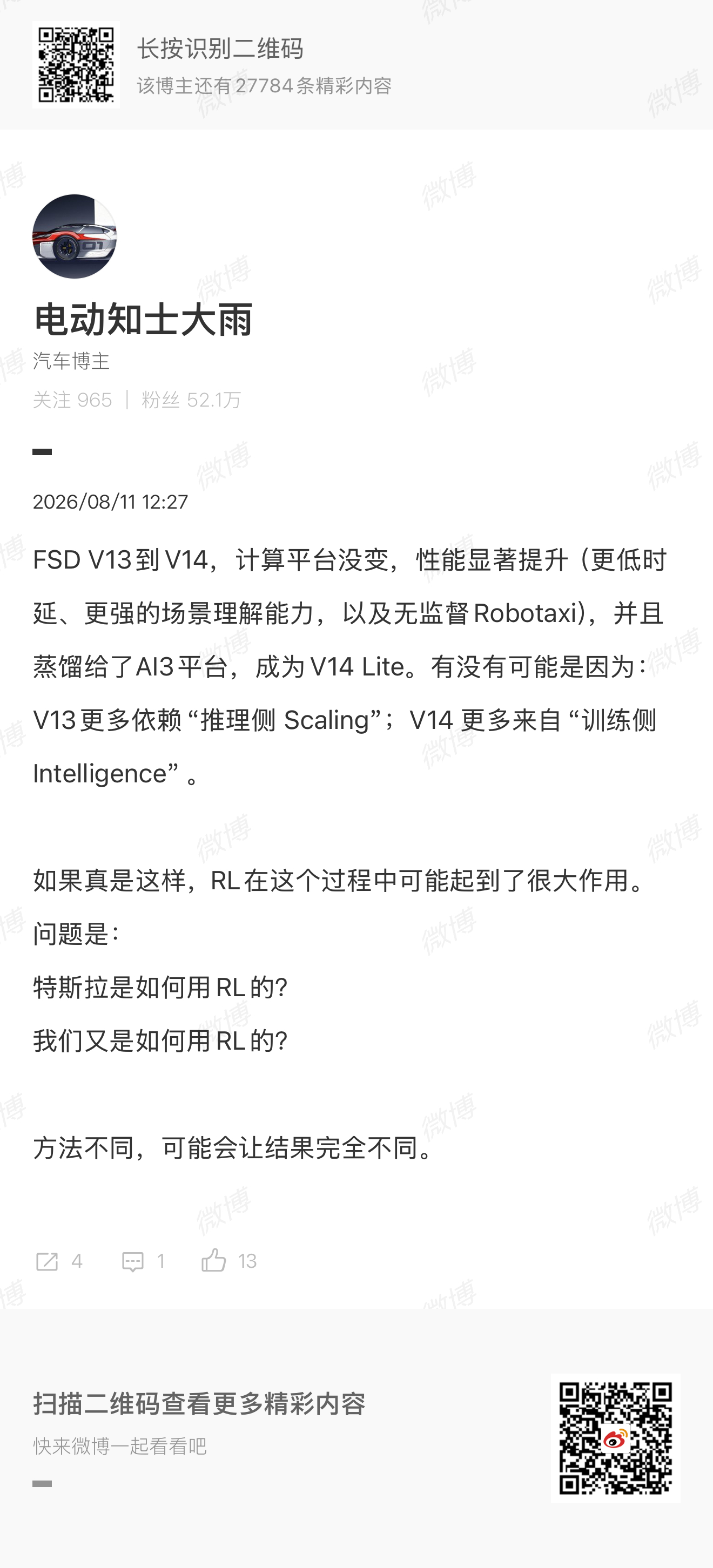
Source: 电动知士大雨 (Weibo) — translated & adapted for XPENGTech.
Get the next one direct.
New articles, or a daily / weekly digest — the same list EVConduit keeps.