
3 September 2026
XPeng GX's 800V "Hybrid Silicon-Carbide" E-Drive, Explained
Why the XPeng GX's solid range comes from an 800V hybrid-SiC coaxial e-drive — mixing IGBT + SiC to reach 98.7% CLTC efficiency at half the SiC cost.
The XPeng GX has solid range, and the core reason is a set of 800V hybrid silicon-carbide (SiC) coaxial e-drive.
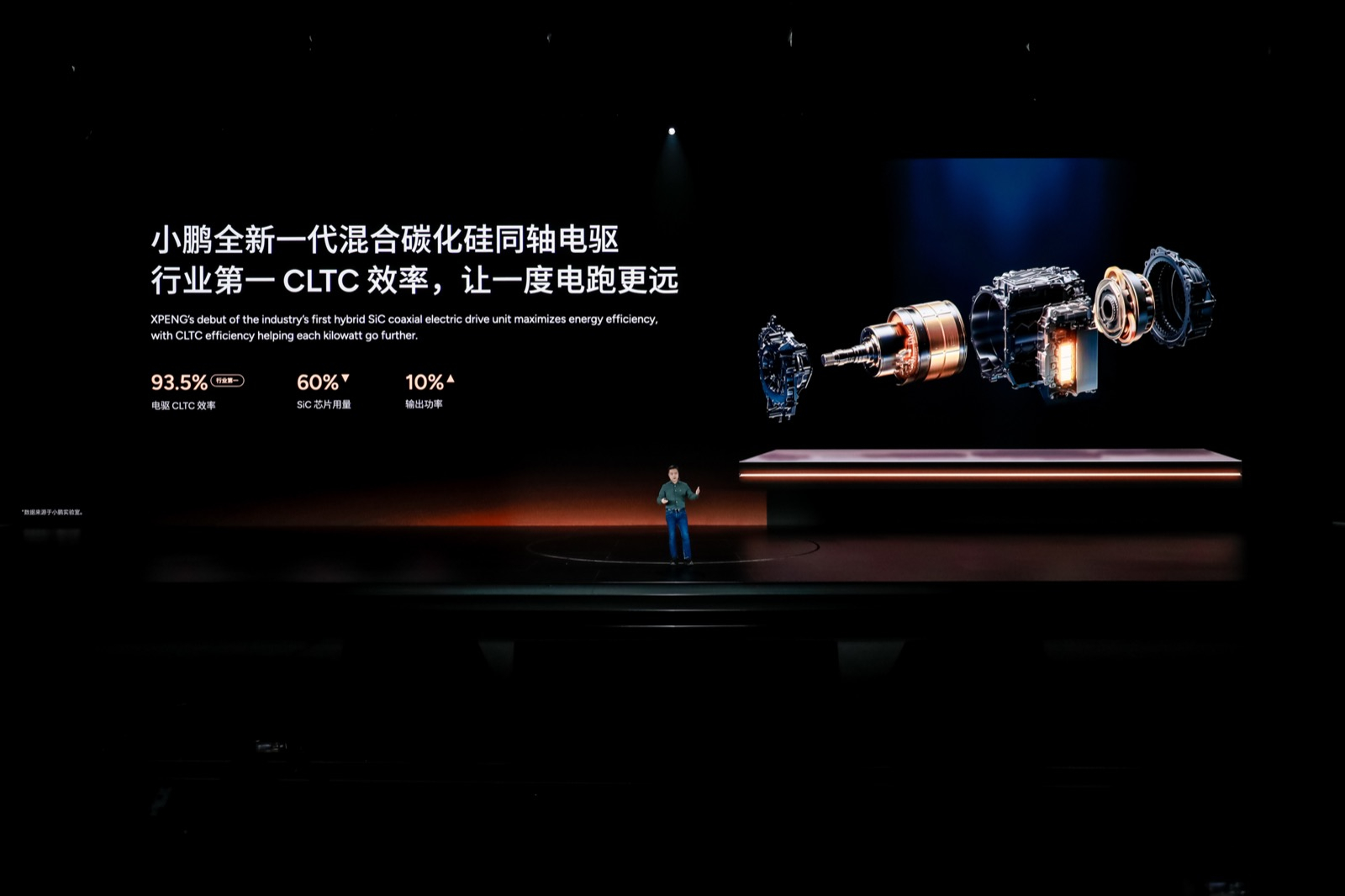
"Hybrid silicon carbide" — "hybrid SiC" for short — what exactly is it? Why can CLTC efficiency improve from the previous generation's 92% to 93.5%? Going from IGBT, to full SiC, then to IGBT + SiC — is this genuine technical progress, or a cost-cutting compromise?
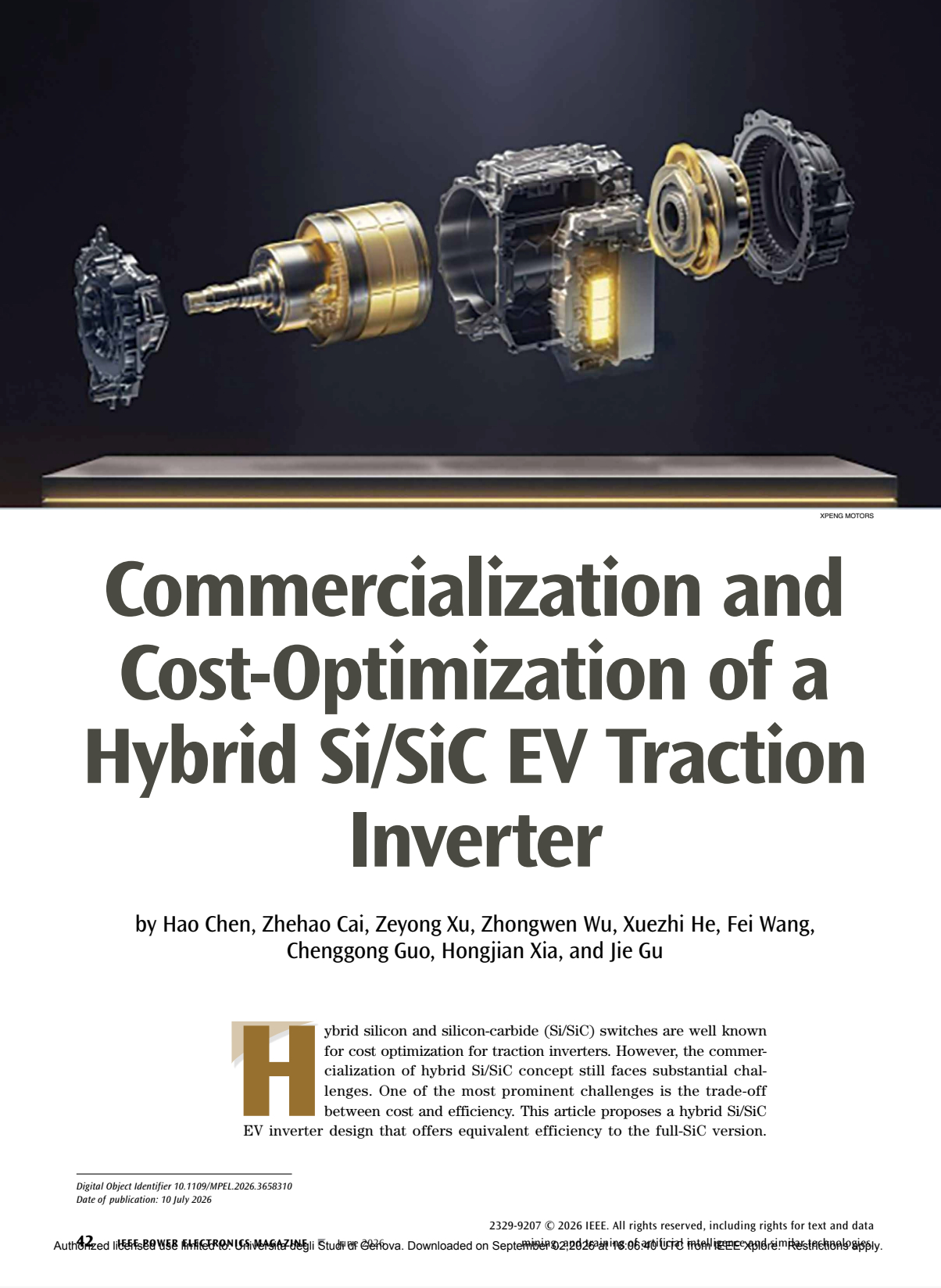
Conveniently, in 2026 XPeng published a paper in IEEE Power Electronics Magazine, making public the chip composition and control logic of its mass-production hybrid-SiC inverter.
The two devices
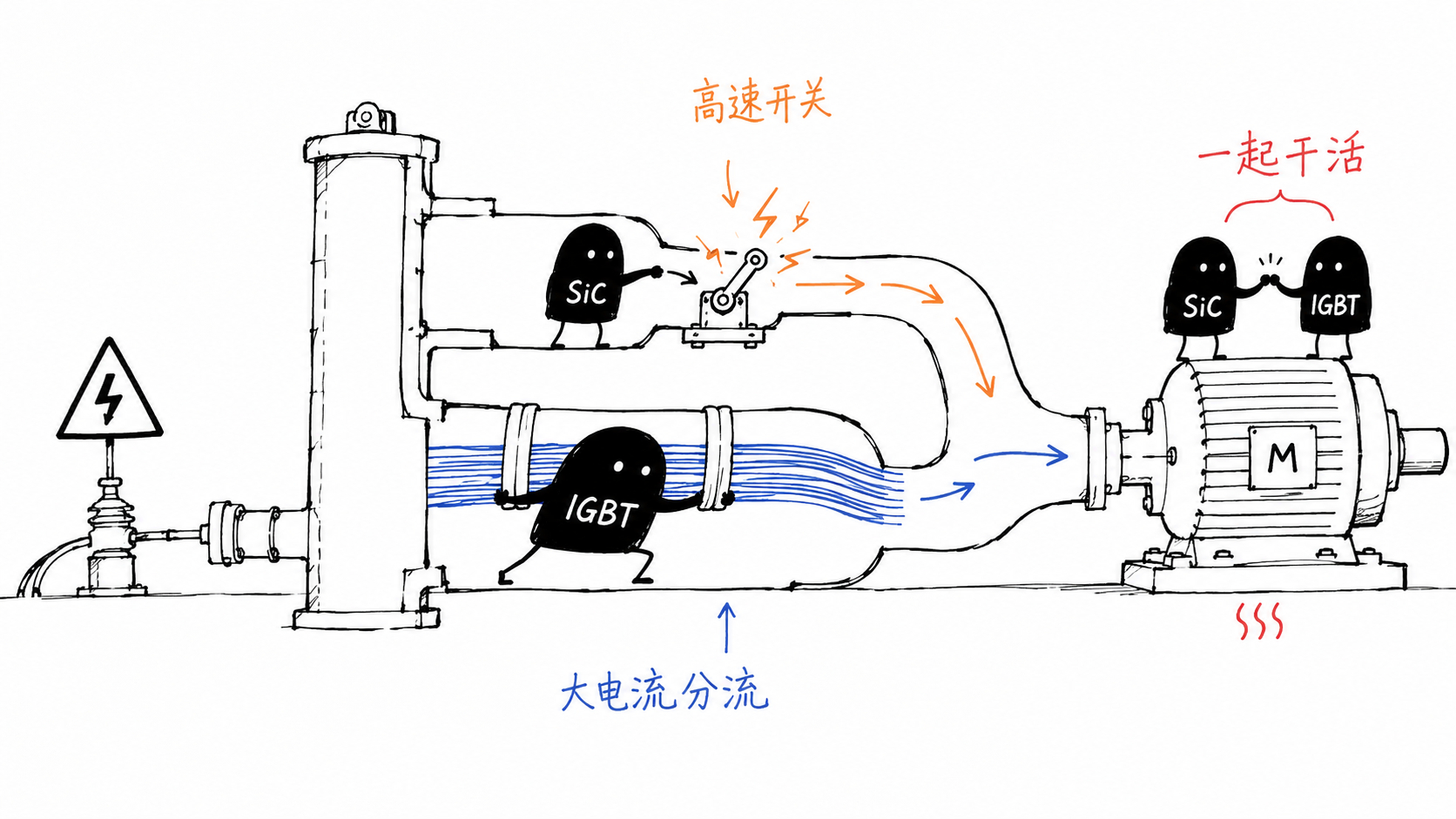
IGBT is made of silicon. You can think of it as a MOSFET controlling a bipolar conduction path. It's low cost and conducts high current well; its weakness is relatively high switching loss.
Silicon carbide is a brand-new material — a unipolar, MOSFET-only device with a simpler structure. It withstands high voltage and switches fast, but to carry the same high current, the cost goes up.
XPeng's idea: mix the two, then control them precisely with algorithms.
Four operating regions
Looking into the paper's details, there are four operating regions:
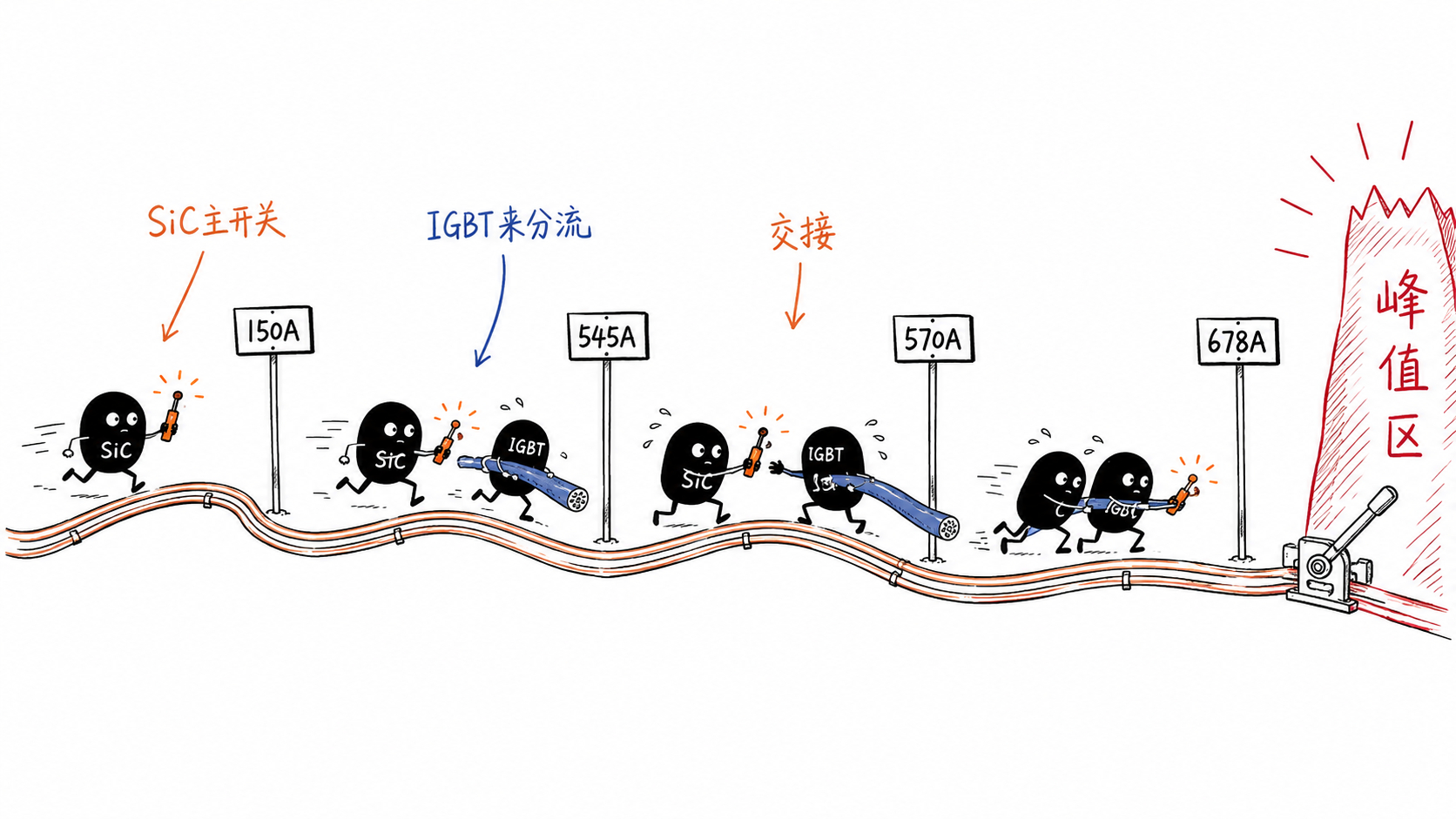
- ≤ 150 A — only the SiC works, minimizing switching loss.
- 150–545 A — SiC turns on first and off last, handling high-speed switching; the IGBT turns on last and off first, joining near zero voltage and only sharing conduction current. This is hybrid SiC's sweet spot.
- 545–570 A — IGBT handles turn-on, SiC handles turn-off; both devices conduct together.
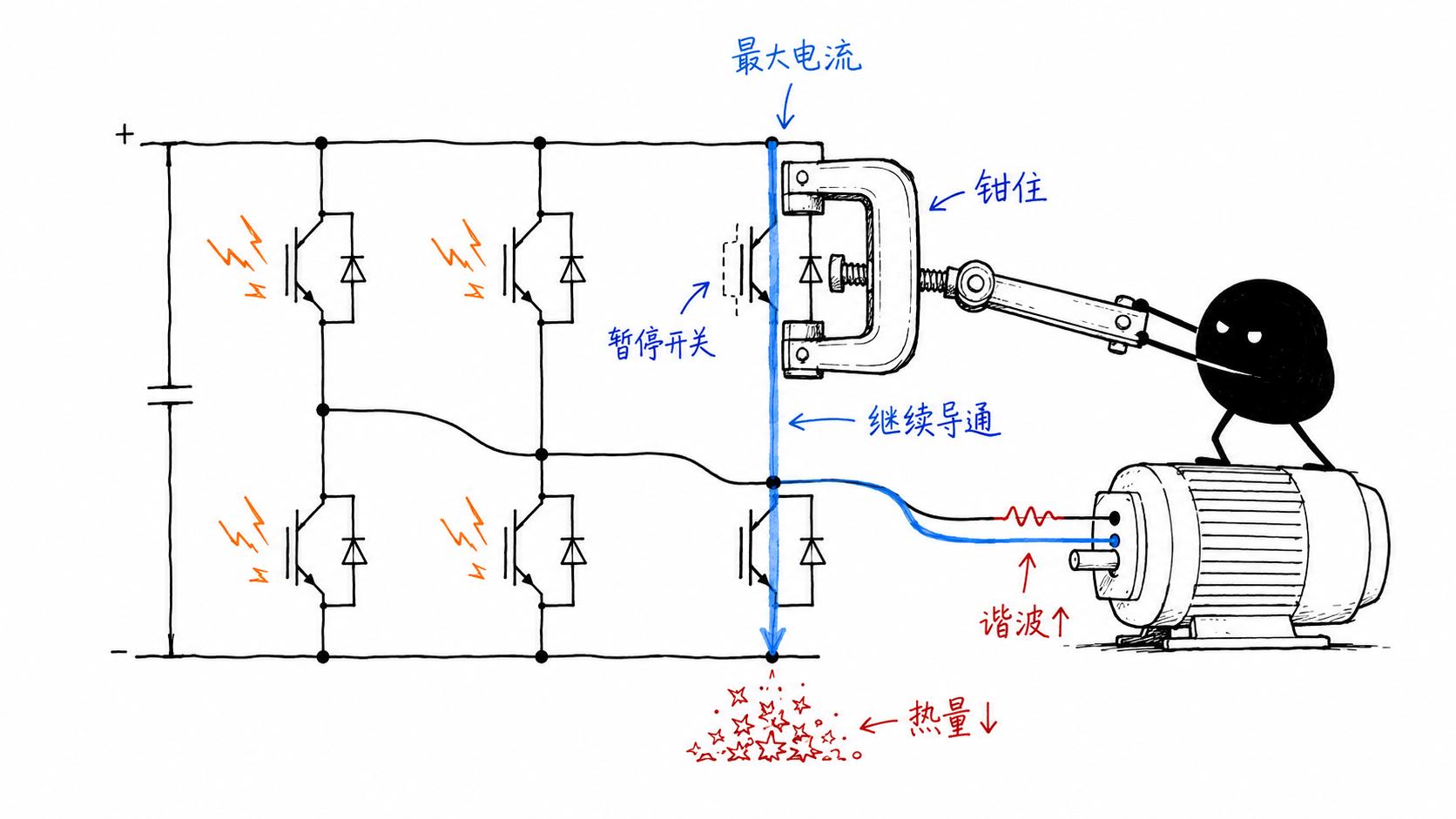
- 570–678 A (peak) — both devices struggle. The controller switches to DPWM and briefly clamps the highest-current bridge arm: it keeps conducting but temporarily stops switching.
That last trick cuts peak switching loss and raises maximum current capability — at the cost of harder-to-control current harmonics and e-drive noise, so it can't be used all the time.
The results
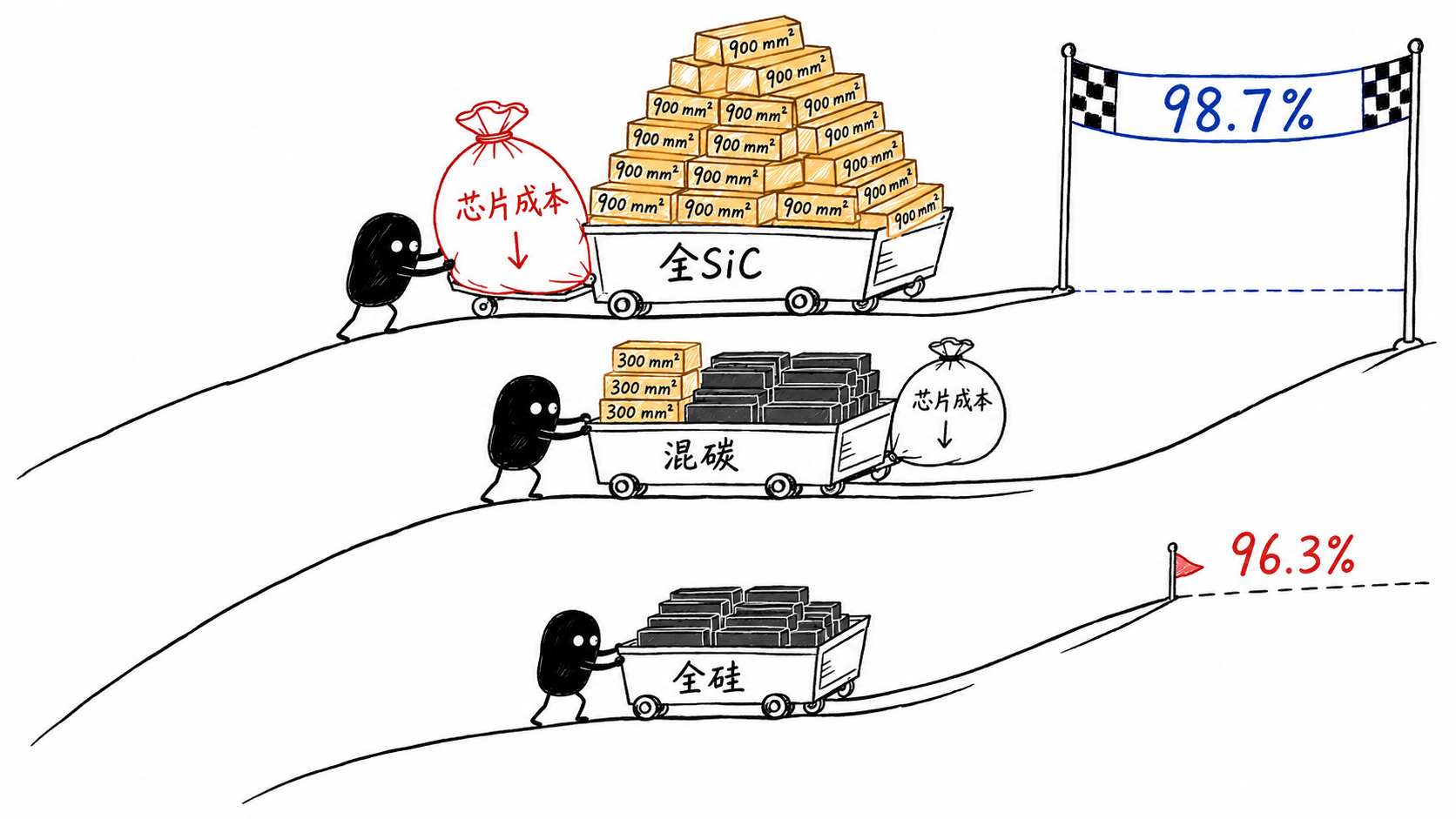
- All-silicon IGBT: 96.3% CLTC inverter efficiency.
- Full SiC (900 mm²): 98.7% — the upgrade from IGBT to SiC.
- Hybrid SiC (300 mm²): 98.7% — with more than 50% lower power-semiconductor bare-die cost.
The hybrid-SiC solution cuts SiC area to 300 mm² while keeping efficiency at 98.7%. It isn't more efficient than full SiC — but it beats full IGBT on efficiency and beats full SiC on cost.
The takeaway
From IGBT to full SiC is a materials upgrade; from full SiC to hybrid SiC is a systems-engineering upgrade.
Real progress isn't about covering the whole car in the most expensive material — it's about using technical innovation to deliver the same performance while saving consumers money.
Source: 张抗抗KK (Weibo) — translated & adapted for XPENGTech.
Get the next one direct.
New articles, or a daily / weekly digest — the same list EVConduit keeps.