
25 October 2026
XPeng's G9L Takes Five Stars in China's EV Fire-Safety Index
XPeng says its G9L has won five stars in C-EVFI, China's EV fire-safety index, run by the CMVR testing institute. The protocol tests what crash ratings miss: two hours without fire after thermal runaway, smoke control, door release after power loss. We explain the tests, the film, XPeng's separate seven-stage crash-and-burn run, and why an 80% five-star rate limits what the badge proves. No score sheet has been published.
XPeng's G9L has been awarded five stars in China's C-EVFI — the China Electric Vehicle Fire Safety Index — the company announced on 25 October, framing it as proof that the car has passed a "collision plus fire" test rather than only a crash test.
The post is short and the claim is specific: the G9L "held up to the extreme collision-and-fire test", with the tagline that what you can see is safety and what you cannot see is the baseline. The accompanying four-minute film is more interesting than the post, because it documents the test house rather than the car.
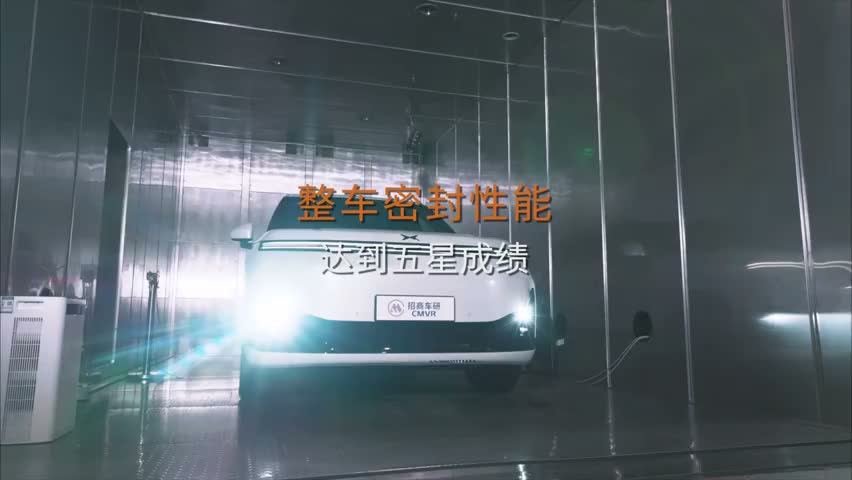
The G9L in CMVR's sealed chamber, at the point where the film says whole-vehicle sealing reached a five-star result. Image: 小鹏汽车 on Weibo.
What C-EVFI is
C-EVFI was created by CMVR — 招商车研, the China Merchants Testing Vehicle Institute — as a fire-safety index specifically for electric vehicles, and it runs a dedicated whole-vehicle fire laboratory. Its own published description lists four dimensions:
| Dimension | What it covers |
|---|---|
| 安全提示 — safety prompts | What the car tells occupants and rescuers before and during a thermal event |
| 应急救援 — emergency rescue | Whether doors release and occupants can get out, including the mechanical lock release |
| 火灾防护 — fire protection | Whether the pack and vehicle resist ignition and spread |
| 数据联动 — data integration | Whether the car reports the event to the outside world |
Two of the protocol's details are worth knowing because they are stricter than the Chinese national standard:
- Whole-vehicle bottom nail penetration. Where GB 38031-2020 requires no fire for five minutes after thermal runaway, C-EVFI's protocol asks for two hours — the argument being that occupants and firefighters need time.
- Mechanical door release. The index tests whether the doors open after the car loses power or the battery is damaged, and pulls the handles from both inside and outside during a whole-vehicle thermal-diffusion test — a direct response to the failure mode that matters most in a real fire.
C-EVFI says it has now tested more than 100 models from over 30 brands, including BYD, Li Auto, BMW and Tesla, has logged 200-plus fire risk points, and that the share of cars reaching five stars has risen from 50% in 2023 to about 80% today.
What the G9L film actually shows
The video is shot at CMVR's Jinfeng base in Chongqing, with coordinates overlaid on the opening aerial, and it walks through numbered test items:
- Charging compatibility safety — after the test, the film's caption states there was "no fault and the charging function was intact".
- Item two: fire protection — the car on a rig inside a test hall, with instrumentation mounted over the bonnet.
- Item four: smoke control — the caption claims "superior sealing, no visible smoke inside the cabin", shown with smoke being driven at the body.
- Whole-vehicle sealing performance — "reached a five-star result".
- Item five: thermal propagation protection — the pack-level challenge that gives the index its two-hour standard.
- A gas burner under a steel plate appears in the sequence, the kind of localised ignition source used to test how a pack and its enclosure behave when something underneath is burning.
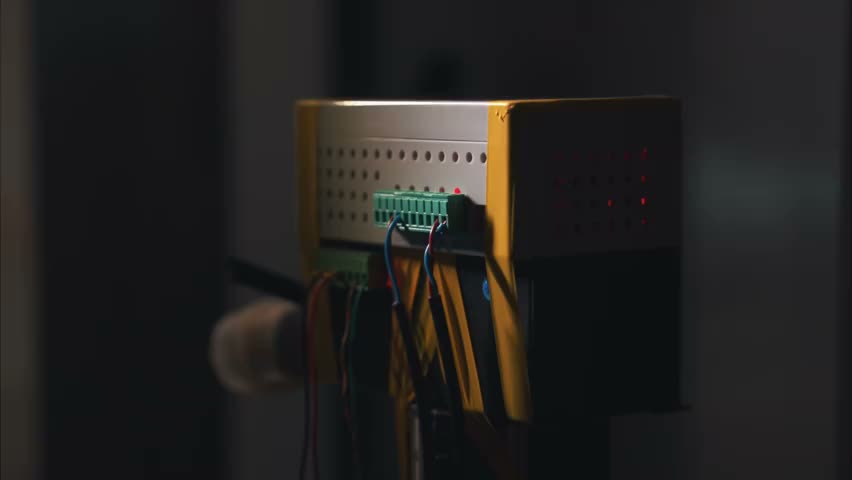
Item two, fire protection: the G9L on CMVR's rig. Image: 小鹏汽车 on Weibo.
The test XPeng ran before this one
This is not the G9L's first safety demonstration. At its August pre-sale — 259,800 RMB, the car that went global on 12 October as a six-seater — XPeng ran a seven-stage linked test on a single car, witnessed by CATARC:
- Five minutes of whole-vehicle immersion.
- A 35 km/h underbody scrape.
- A 50 km/h single-sided bridge spiral roll.
- A 100 km/h frontal impact.
- A 100 km/h rear impact.
- A 100 km/h side impact.
- A 150-second fire test on the battery pack, removed after the crashes.
The point of stringing them together was that damage accumulates: the pack that faced the fire had already been immersed, scraped, rolled and hit three times. XPeng's reported result was that the cabin structure stayed intact, the doors unlocked and opened, the airbags deployed, the e-Call system intervened, and the pack did not smoke, ignite or explode during the fire test.
That test is XPeng's own, run with a certification body watching. The C-EVFI result is different in kind: an independent index applying its own protocol and awarding a star rating.
Why the fire index exists at all
The case for a separate fire-safety index is that crash tests answer a different question. A car can score five stars in a frontal impact and still have a pack that vents into the cabin, a door that will not unlock after the 12-volt system dies, or a thermal runaway that starts twenty minutes after everyone has walked away. Those are the failure modes that make the news, and none of them are fully captured by NCAP-style scoring.
The G9L's development targets were already the global ones — XPeng says the car was engineered against Euro NCAP 2027, ANCAP 2027, C-IASI 2023 and C-NCAP 2024, with 6.74 million km of testing across 26 countries. Fire safety is the part of that story a buyer cannot verify from a spec sheet, which is why the index exists and why a five-star result is worth reporting.
Caveats
- XPeng announced the rating; we have not seen the C-EVFI report. The post gives no score breakdown, no per-test figures and no certificate number, and the index's own site is the place those would appear.
- Five stars is not rare. C-EVFI's own figure is that around 80% of tested models now reach five stars, up from 50% in 2023 — the rating tells you a car cleared a bar that most new cars clear.
- The film is a manufacturer's edit. It shows the tests XPeng chose to show, with captions that state the results; the laboratory's own data is not in the video.
- The seven-stage test and the C-EVFI result are different things. One is an XPeng-run stunt with CATARC witnessing; the other is an index applying a published protocol. We have kept them separate.
- Lab conditions are not road conditions. Immersion, scrape, roll and fire are controlled and repeatable; a real crash is none of those things.
- The G9L's own numbers are the company's, including the 6.74 million km and the four target standards.
- A five-star fire rating is not a five-star NCAP rating, and the two should not be compared.
The bottom line
The interesting thing about the G9L's C-EVFI five stars is not the star: it is that China now has an independent, protocol-driven test for the part of EV safety that crash tests miss — whether the car stays survivable after something goes wrong with the battery. XPeng's G9L clearing it, in the same autumn as a seven-stage crash-and-burn demonstration of its own, is a consistent story rather than a surprising one. What we cannot yet see is the score sheet behind the star.
Source: 小鹏汽车 (Weibo, 25 October 2026) and its CMVR test film, with the C-EVFI protocol and laboratory descriptions published by 招商车研 (CMVR) and summarised by Gasgoo, and the August seven-stage test as reported by Sina Auto — translated and adapted for XPENGTech.
Get the next one direct.
New articles, or a daily / weekly digest — the same list EVConduit keeps.