
24 October 2026
XPeng Tops the DACH EV Satisfaction Study Again, With Tesla Second
XPeng has finished first in USCALE's EV Satisfaction Study for a second year: 82% of its owners in Germany, Austria and Switzerland would recommend the brand, against 53% across 23 brands. Tesla rose from sixth to second on 79%, with Skoda and Porsche at 67% and Opel last at 19%. We set out how the 4,004-driver survey works, what XPeng scored badly on (route planning), and the caveats that matter: a self-selecting sample, unpublished per-brand sizes, and a German fleet only months old.
For the second year running, XPeng has finished top of the USCALE EV Satisfaction Study in the German-speaking market: 82% of its owners said they would be very likely to recommend the brand, against 53% across all 23 brands surveyed. Tesla came second on 79%, up from sixth a year earlier, with Skoda and Porsche level at 67%.
XPeng's German account publicised the result on LinkedIn, saying its drivers rated it ahead of "all US, European and Asian brands". The survey itself is a consumer study by a Stuttgart consultancy, not a manufacturer award, and it is the seventh edition of a series that has been running long enough to show a trend.
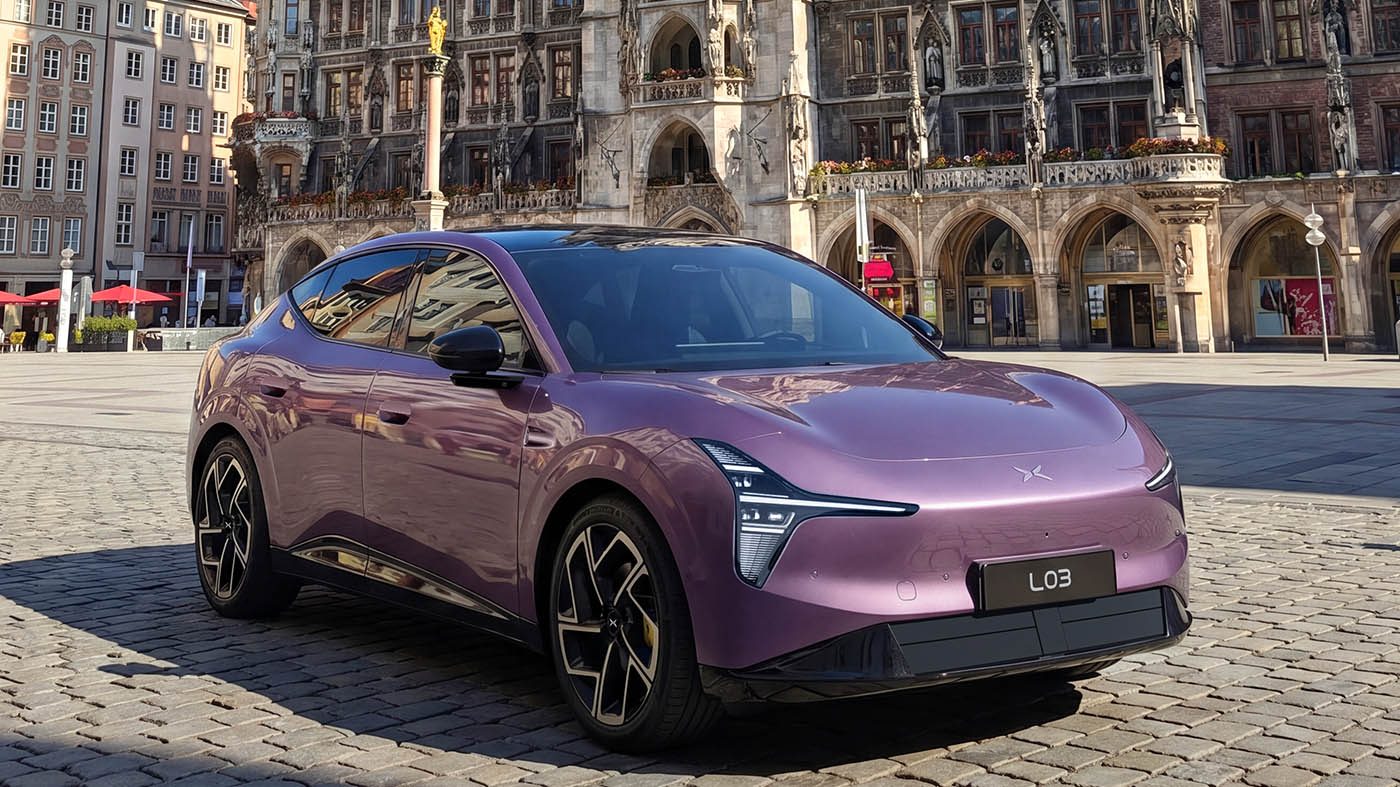
A MONA L03 in Munich. Image: XPeng, via EV.
How the study works
- USCALE, a Stuttgart research consultancy, surveyed 4,004 drivers of fully electric cars up to three years old in June and July 2026, across 23 brands.
- Respondents rated how likely they would be to recommend their car to a friend or colleague on a 0–10 scale. Answers of 9 or 10 count as promoters; 0–6 as detractors. XPeng's 82% is its share of promoters.
- The programme's own net promoter score — promoters minus detractors — rose to 38 from 33, its highest in the series, with 53% of all respondents promoters, 15% detractors and 32% neutral.
- Drivers are recruited through social media. USCALE says plainly that the sample is not representative of the average driver, and that the people who answer tend to scrutinise vehicle concepts more closely than typical customers.
That last point is the most important qualification in the whole exercise, and it applies to XPeng's win as much as to anyone else's.
What XPeng's owners liked, and what they did not
USCALE's read is that XPeng was above average in nearly all categories, with charging power, charge management and real-world range its strongest points — the combination of peak kW, intelligent charging behaviour and range you actually get.
Its weakest area was route planning. XPeng told the outlet covering the study that its connect app had "also improved significantly", which is a different claim from being best in class.
Tesla's owners, by contrast, praised software, the connect app, route planning and energy consumption, while more than half criticised charging power — the mirror image of XPeng's profile, and a reminder that these rankings measure different things for different cars rather than a single "goodness" score.
Below the top four the table flattens and then falls away. BYD and Leapmotor sat mid-table at 47% and 46%, with Volkswagen on 46%, its software and app named as major problems. Mercedes-Benz improved on the new MMA platform in range, consumption and charging but drew more criticism for software and build quality; Audi ranked in the bottom four despite gains. At the bottom, Opel had 19% willing to recommend and 50% who would advise against, with Fiat on 24% and MG on 30%.
The problem with reading too much into it
Three caveats matter more than the headline 82%.
The fleet is young. XPeng registered 393 cars in Germany in 2024, 2,991 in 2025 and 7,023 in the first nine months of 2026, according to KBA data. Most of the drivers surveyed in June and July therefore had owned their car for months, not years. What this measures is early-ownership satisfaction — which is worth knowing, but is not a durability result, and the brand's oldest German cars are barely two years into their lives.
The sample sizes are not published. USCALE did not disclose how many respondents drove each brand, so the 63-point gap between XPeng and Opel is not necessarily as solid as it looks.
The comparison to last year is the company's. That XPeng's score rose a point and that it was first in 2025 come from XPeng, though the broader result is corroborated: German outlets including notebookcheck report the same ordering and the same figures.
There is also a detail worth noting in how the promoters are presented: the published chart shows no detractor share for XPeng, while 6% of Tesla drivers were detractors. An 82% promoter figure with an unpublished detractor figure cannot be turned into a net score, so the brand's position at the top rests on the promoter share alone.
The rest of the survey is a warning, not a victory lap
For all the record overall satisfaction, the 2026 edition is unusually clear that owners' patience is being tested by the two things that define the EV experience:
- Range and charging improved, and expectations rose faster. 59% reported a real summer range above 400 km, up from 50%, and 77% of cars could charge at 150 kW or more — but only 58% rated 150 kW as good or very good, down from 65%, and 71% reported problems when charging, most often a session that would not start or delivered less power than expected.
- Software is the biggest single complaint. 48% reported problems with their car's connect app, ranging from 8% of Tesla drivers to 92% of Opel drivers. Asked what should improve, 44% named software quality, 42% charging power, 39% the connect app, 35% route planning and 34% range.
- And the noises. About half of respondents said warning and notification sounds bothered them, from 29% of Mini drivers to around 80% of Hyundai and Kia drivers.
USCALE's founder Axel Sprenger put it in one line: EV drivers have never been more satisfied, "but they are also becoming increasingly demanding."
Why Germany matters to the number
The survey lands in the middle of XPeng's fastest European growth. Its German registrations are up 279% year on year in the first nine months of 2026, the quarterly trend rising from 1,207 to 2,150 to 3,666, and July set a monthly record of 1,253. The line-up has widened from three models in 2025 to six — the L03 and G6 SUV coupés, the P7+ fastback, the G9 and G9L SUVs and the X9 — with a seventh due soon, and the dealer network is set to go from 50 sites at the end of 2025 to 110 by the end of 2026 after adding Emil Frey as a partner.
XPeng raised its German target to 10,000 registrations this year from about 8,000 and has set 22,000 for 2027, according to Markus Schrick, who runs its Central Europe sales region. Ten thousand would need about 2,980 registrations in the fourth quarter — roughly 990 a month, below the third quarter's average of about 1,220.
The home market gives that urgency context: Chinese passenger-car retail sales fell 21% in the first nine months of 2026 to 13.4 million, with new-energy sales down 12%. XPeng's own global deliveries hit a record 118,390 in the third quarter, but its nine-month total was still 9.2% below the year before. Germany's 1,250 September registrations compare with 41,256 deliveries worldwide that month.
Caveats
- The sample is self-selecting. USCALE recruits through social media and says so; people who answer a survey about their new EV are not a random sample of owners.
- Per-brand sample sizes are unpublished, so the ranking's margins cannot be tested.
- No detractor share for XPeng, which means its net promoter figure is unknown while Tesla's is not.
- It is an early-ownership study. XPeng's German fleet is mostly months old, so this is satisfaction with the first few thousand kilometres, not reliability at five years.
- The year-on-year claims are XPeng's; the 2026 ordering is independently reported by German outlets.
- It measures willingness to recommend, not faults. A car can score well on promoters while having well-known problems, and the survey's own answers show charging and software complaints rising across the board.
- We have not seen USCALE's full report, only the published summary figures and the outlets reporting them.
The bottom line
XPeng finishing top of a 4,000-driver satisfaction study in Germany, Austria and Switzerland two years running is a real result and a more useful one than any award a jury hands out — owners who have lived with the cars are the hardest audience to please. It is also a result about young cars from a young brand, with unpublished sample sizes and, for XPeng, no published detractor figure.
The finding that deserves more attention than the ranking is the one that applies to the whole market: satisfaction is at a record high and the complaints are all about charging and software. XPeng's strongest categories are exactly the ones owners still complain about most.
Source: EV / eletric-vehicles.com ("XPeng Tops DACH EV Satisfaction Study Again as Tesla Climbs to Second," Cláudio Afonso, 23 October 2026), reporting USCALE's EV Satisfaction Study 2026 and KBA registration data, corroborated by notebookcheck — translated and adapted for XPENGTech.
Get the next one direct.
New articles, or a daily / weekly digest — the same list EVConduit keeps.